
How to Build a Real Estate Referral System Agents Trust
Real Estate Referral Systems
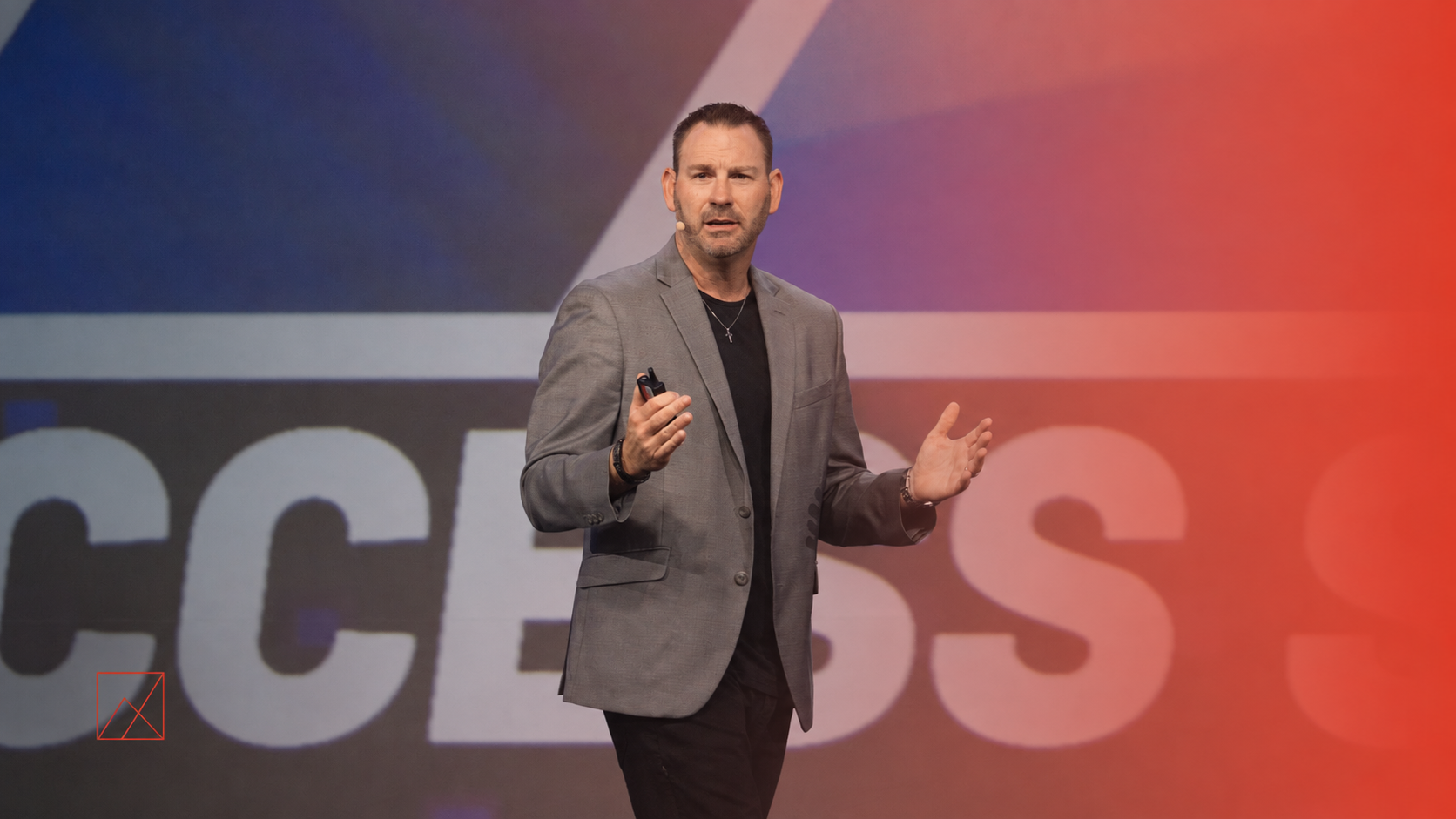
At the 2026 Tom Ferry Success Summit, Matt Farnham focused on becoming the kind of person and professional referrals naturally flow toward. Identity creates value, value builds trust, trust creates authority, and referrals become the overflow.
Are you trying to manufacture a real estate niche, or are you building from the identity, talents, communities, and client experience you already have?
The point was that authority is not where you start.
It is where you end up after people have watched you add value consistently enough to trust you.
Start with identity, not a marketing persona
The framework challenged the idea that an agent needs to borrow an industry playbook and turn it into an identity.
A geographic farm can be useful.
A price point can be useful.
A lead source can be useful.
Those things still do not tell people who you are.
His message was to identify the talents, values, interests, and communities that are already natural to you, then build the business from there.
Maybe you are a strong teacher.
Maybe you naturally connect people.
Maybe you are a problem-solver, encourager, leader, organizer, negotiator, or community builder.
The business gets easier to sustain when the way you create value is aligned with who you actually are.
Your life and your business do not need to be separate worlds
One of The framework’s strongest ideas was what he described as a “one-life” approach.
Your children’s activities, faith community, golf group, neighborhood, professional network, volunteer work, hobbies, and friendships are already part of your relational world.
That does not mean turning every relationship into a prospecting list.
It means recognizing that trust is already being built in the places where people experience you consistently.
You can contribute there.
You can connect people.
You can host a gathering.
You can answer questions.
You can be useful without making every interaction about real estate.
Over time, your identity and your expertise become connected naturally.
Value comes before authority
The framework’s sequence matters.
Identity first.
Then value.
Then trust.
Then authority.
Then referrals.
Trying to jump directly to authority usually sounds like self-promotion.
“I am the expert.”
“I am the best agent for this market.”
“I am your referral resource.”
Those claims become more believable after people have repeatedly seen you help.
Share something useful with another agent.
Teach a process that improved your client experience.
Offer a template.
Explain how you solved a difficult problem.
Contribute in a group.
Speak when you have something useful to add.
Document what works and let people watch you work.
Authority becomes a conclusion other people reach.
Client experience can be your first authority
The framework also emphasized that authority does not need to begin with the largest sales volume or the biggest online following.
It can begin with the way you take care of people.
High-touch communication.
Thoughtful gifting.
Future pacing.
Remembering the details that make a client feel seen.
Making sure people understand what happens next.
That experience becomes something clients and other agents can describe to someone else.
For a growing business, this is a powerful place to start because the standard is largely within your control.
You may not control the market.
You do control whether the client feels informed, cared for, and remembered.
Document, share, repeat
The framework’s authority model depends on visibility, but not visibility for its own sake.
People need enough exposure to your value to understand what you are known for.
That is why documenting and sharing the way you work matters.
If you improve your seller communication process, share the idea with peers.
If you build a client gifting standard that creates a better experience, explain it.
If you learn something through coaching, apply it and then show what changed.
If you have a framework that helps clients make a clearer decision, teach it.
Repetition matters because people rarely form a strong impression from one post, one meeting, or one good transaction.
They build trust after seeing the pattern.
Make the referral feel like relief, not risk
This is where the framework connected identity and authority to the mechanics of a referral.
When another agent hands you a client, they are transferring trust.
The best way to honor that is to prove them right.
Communicate proactively.
Take care of the client.
Keep the referrer informed at the right milestones.
Close the loop.
Pay referral fees promptly when applicable.
Express appreciation.
The goal is for the referring agent to feel relief after making the introduction, not uncertainty.
The framework uses a strong operating idea here: the phone should ring for new business, not because current clients or referral partners are asking, “What’s next?”
That is what a mature client and referral experience looks like.
Referrals are the overflow, not the opening ask
This is an important distinction in The framework.
He did not frame referrals as something you chase first.
He framed them as the byproduct of alignment and generosity.
When you are working from a clear identity, contributing in communities you care about, adding value consistently, and creating a client experience people trust, referrals become a natural next step.
That does not remove the need for follow-up or communication.
It changes the foundation beneath them.
The relationship is not built around extracting an introduction.
The introduction comes from the relationship.
Use AI to amplify who you are, not replace it
The framework also addressed AI directly.
His message was not to resist it.
It was to use it in the right role.
AI can help organize your ideas, distribute content, document processes, and scale communication.
It can amplify a clear voice.
It cannot decide what your values are for you.
It cannot manufacture the lived relationships that make your identity credible.
The framework’s phrasing was direct: AI can replicate what you do. It cannot replicate your soul.
That makes the input even more important.
The clearer you are about who you are and how you serve, the more useful AI becomes as an amplifier rather than a replacement personality.
Replace “or” with “and”
Another part of The message was refusing the false choice between a meaningful life and a meaningful business.
Business and marriage.
Health and wealth.
Parenting and leadership.
Community and production.
The goal is not perfect balance every day.
It is to stop designing a business that requires you to abandon the parts of your identity that made the business worth building in the first place.
That “both-and” thinking also reinforces his one-life idea. The business works through your real life rather than demanding a separate version of you.
FAQ
What was the framework’s main message at the 2026 Tom Ferry Success Summit?
His presentation focused on building authority and referrals from identity. The progression was identity, value, trust, authority, then referrals as the natural overflow of those earlier stages.
What does “identity as specialization” mean in real estate?
It means your differentiation can come from your natural talents, values, passions, and communities rather than only from a geographic area, property type, or price point.
How do agents build authority with other agents?
Add value consistently, share useful processes and ideas, contribute in industry communities, let peers watch how you work, and create a client experience that makes referrals feel safe.
How do you make another agent comfortable referring a client?
Prove them right after the introduction. Communicate proactively, take care of the client, keep the referrer appropriately informed, close the loop, and handle the referral agreement promptly.
What role does AI play in the framework’s referral strategy?
AI can amplify your voice, systems, content, and distribution. It works best when it scales a clear identity rather than replacing it with generic content.
Bottom Line
Referral authority is not something you announce.
It is something other people conclude after watching the way you live, contribute, communicate, and take care of people.
The framework’s Summit message starts with identity, not lead generation.
Know who you are. Add value from that place. Let trust compound. Make the client and referrer experience strong enough to prove people right when they recommend you.
The referral comes after the authority.
Put it into action
Write down three talents or qualities people consistently rely on you for. Then list the communities where people already experience those qualities. Choose one way to add useful value in one of those communities this month, and review your referral process to make sure every introduction receives proactive communication from first contact through closeout.
For the complete Success Summit 2026 recap, explore Janet’s 20 Real Estate Lessons From Tom Ferry Success Summit 2026.
Would you like to talk through how this applies to your business? Email Janet hello@janetmiller.coach or send her a DM on Instagram at @janetmiller.coach and tell her what you are working through.