
AI Operating System for Real Estate Teams
AI Operating Systems for Real Estate
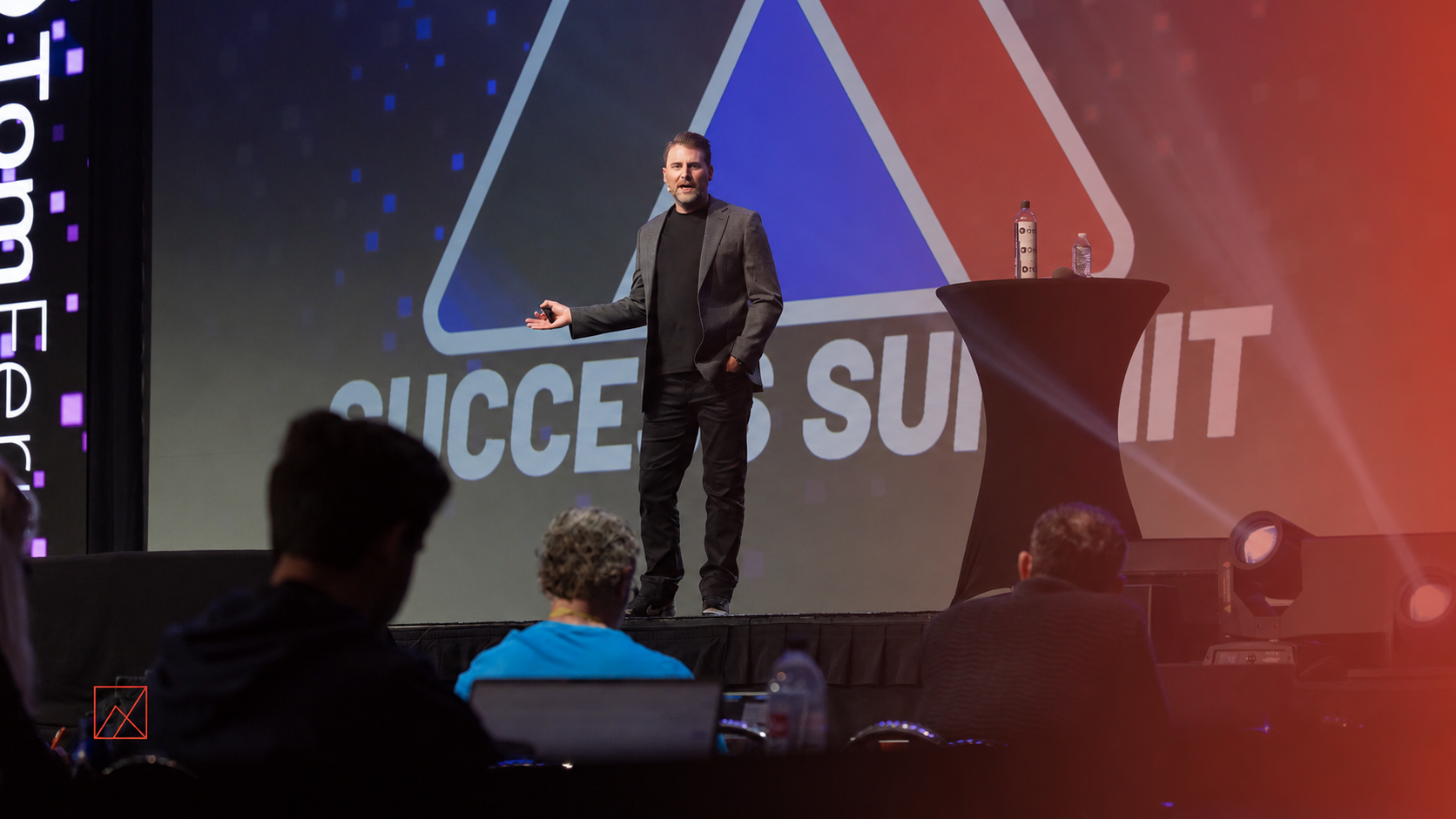
At the 2026 Tom Ferry Success Summit, Derek Caldwell started with a problem most real estate businesses already feel: too many apps, too many logins, too many subscriptions, and too much manual work connecting systems that were never designed to work together.
His phrase for it was direct: real estate professionals are “renting their business one app at a time.”
The framework’s answer was not another app. It was an AI Operating System, or AI OS, built around the business itself. The idea is to make AI the layer that connects the tools, data, and workflows you already use so the owner or assistant stops being the human glue holding everything together.
App overload is a business-control problem
A team can have a CRM, transaction platform, call tracker, marketing system, project board, financial dashboard, and several spreadsheets and still struggle to answer basic questions quickly.
Where is the latest information?
Which system is right?
Why is this data in one app but not another?
Who has to copy it manually?
The framework frames this as more than an efficiency problem.
When your business depends on a collection of disconnected platforms you do not control, you are also giving away part of the operating structure of the company.
His CEO-level shift was: own more of the intelligence and logic that run the business.
Ai becomes the integrator
Most software stacks force the human to become the connection point.
A lead enters one system.
A call is tracked somewhere else.
A transaction moves to another platform.
The project team works in a separate tool.
Reporting requires exports and spreadsheets.
The framework’s AI OS flips that relationship.
Instead of the human connecting the systems, the AI layer connects the systems and gives the human the result they actually need.
That does not necessarily mean replacing every existing platform.
It means defining what each platform contributes, what data needs to move, and what the AI layer needs to coordinate.
Start with the desired outcome
The framework did not recommend starting with code.
He recommended starting with a business problem.
A useful desired outcome might sound like:
“I want one dashboard that shows our lead conversion rates by pulling information from the CRM and the call tracker.”
Or:
“I want a system that reviews our calls and surfaces the most common objections.”
Or:
“I want one place to check contract compliance without manually comparing multiple files.”
The desired outcome gives the AI OS a job.
Without that, the business can spend time building something technically interesting that solves no important problem.
Audit the apps you are already paying for
The framework’s first action was a tech-stack audit.
List every software tool, platform, subscription, spreadsheet, and database the business uses.
Then ask:
- What does this tool actually do for us?
- What data lives here?
- What other tool contains the same information?
- Where do we manually move information between systems?
- Which business question still takes too long to answer?
- Which app creates more work than it removes?
The purpose is not to cancel everything.
It is to find the gaps where the business is paying for technology but still relying on manual coordination.
Find the single biggest gap first
The framework’s presentation did not require an agent to build an entire operating platform in one week.
Find the largest point of friction first.
Maybe the CRM and call tracker do not communicate.
Maybe the transaction platform and project board require duplicate updates.
Maybe the owner still has to build a weekly report manually.
Maybe important information exists, but nobody can see it in the place where a decision gets made.
Choose one.
Solve the gap.
Prove the concept.
Then expand.
The rookie path and the rockstar path
One of the most practical parts of The framework was that he offered two ways to start.
The rookie path
Start inside a powerful AI chat environment such as Claude.
Use a well-defined prompt and workflow to make the AI perform a recurring business task that currently requires multiple tools or manual steps.
This is the lower-barrier way to prove that the operating-system concept can work before building custom software.
The rockstar path
Build a custom-hosted platform designed around the business.
That can create a more centralized experience and deeper integrations when the need and technical capacity justify it.
The important distinction is that both paths begin with the business outcome.
The software comes second.
Customization is the advantage
The framework’s argument for a proprietary AI OS was not simply that custom software feels impressive.
A generic app has to work for thousands of different businesses.
Your operating system only needs to work for yours.
That means it can reflect:
- Your brand.
- Your team structure.
- Your terminology.
- Your lead sources.
- Your transaction process.
- Your compliance needs.
- Your reporting requirements.
- Your specific business problems.
That is what makes customization valuable.
The system becomes an asset shaped around how the business actually works.
The framework showed real estate teams already doing this
The framework included examples of teams building their own AI operating systems around real problems.
Some used AI for call analysis.
Others used it to help agents handle wealth-management objections or improve contract-compliance workflows.
The point was not that every team needs the same solution.
The point was that no-code and AI-assisted development have lowered the barrier to building software around a specific business need.
That is a meaningful shift for smaller real estate organizations that previously would have needed a traditional development team.
Own the data and the logic
The “own, don’t rent” message is where The framework becomes a business strategy rather than a technology discussion.
Your CRM, client data, operating rules, workflows, and institutional knowledge are part of the enterprise value of the company.
The more the business can organize and connect those assets intentionally, the less dependent it becomes on one employee remembering where everything lives or one vendor dictating how the process works.
That does not mean ignoring privacy, security, compliance, or vendor terms.
It means treating the architecture of the business as something worth designing deliberately.
FAQ
What is an AI operating system for real estate?
An AI Operating System is a customized layer that connects the tools, data, and workflows a real estate business already uses so information and actions can move through the business with less manual coordination.
Does an AI os require custom software?
No. the framework presented a Rookie path that begins inside AI chat tools and a Rockstar path that can develop into a custom-hosted platform.
What is the first step in building an AI os?
Audit the existing tech stack, identify the biggest point of friction, and define the exact business outcome the first AI workflow needs to create.
Is the goal to replace every app?
No. The first goal is to connect the business more intelligently. Some existing platforms may remain useful sources of truth while the AI layer coordinates information between them.
Bottom Line
The core message was bigger than “use more AI.”
It was about taking back control of the operating structure of the business.
Audit the apps you already rent. Find where the human is acting as the integration layer. Define the result the business actually needs. Then build the smallest AI workflow that solves that problem and expand from there.
The future The framework describes is not a business with more apps.
It is a business where the technology works around the company instead of the company working around the technology.
Put it into action
List every major app and subscription your business uses. Circle the one recurring workflow where you or a support person manually move information between two or more systems. Write one sentence describing the result you wish happened automatically, then use that as the first problem your AI OS needs to solve.
For the complete Success Summit 2026 recap, explore Janet’s 20 Real Estate Lessons From Tom Ferry Success Summit 2026.
Would you like to talk through how this applies to your business? Email Janet hello@janetmiller.coach or send her a DM on Instagram at @janetmiller.coach and tell her what you are working through.