
Your 2027 Real Estate Business Plan: Start With Personal Goals
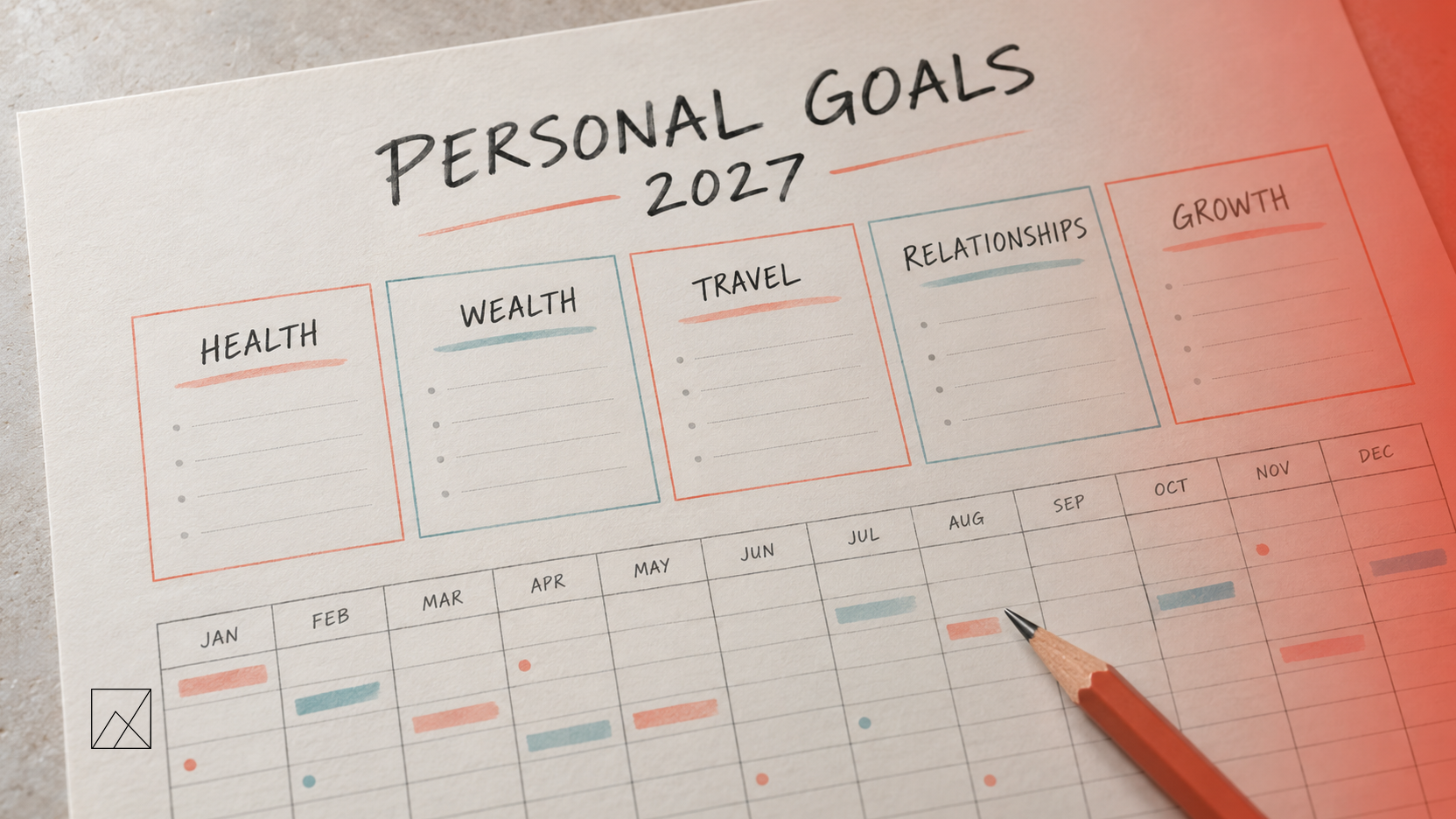
A real estate business plan has a clearer purpose when it starts with the life you want it to support. Begin your 2027 plan with a personal bucket list: the experiences and outcomes that give your work a reason. Then connect those priorities to practical business commitments, calendar time, and regular review.
Quick Answer
Start your 2027 real estate business plan by listing personal goals in five areas of life. Choose the five outcomes that matter most, focus on three priorities for the next 90 days, and connect each one to measurable actions, calendar commitments, and accountability.
Begin With Your Personal Why
Before you set business targets, describe what you want your life to include in 2027. Your personal bucket list can capture the experiences, relationships, health, contribution, and growth that matter to you. It gives your plan a personal point of reference when you make decisions about time, effort, and business priorities.
This list belongs to you. It does not need polished language or a business metric beside every item. Write what you want to experience or have true, then use those answers as the reason behind your goals.
Use Five Areas to Shape Your Bucket List
Review each area of life and write three to five specific items you want to experience or have true by December 31, 2027:
- Health and Vitality Consider your health, energy, daily routines, rest, and how you want to feel.
- Wealth and Contribution Consider your financial goals, the resources you want to build, and the impact you want to make.
- Travel and Adventure Name the places you want to visit and the experiences you want to make time for.
- Relationships and Connections Identify the people you want to spend time with and the relationships you want to strengthen.
- Personal Growth Consider what you want to learn, improve, understand, or change in your own life.
Describe each item with enough detail to make your intent clear. For example, name the experience, relationship, contribution, or personal outcome you have in mind. A broad phrase can point you in a direction; a specific description gives you a clearer way to decide what deserves time on the calendar.
Statements You Want to Be True by the End of 2027
Write your bucket-list items as completed statements, as if you were looking back at December 31, 2027. Use these sentence starters to make each goal personal and specific. Complete them with your own details:
- I played...
- I skied...
- I ran...
- My health is...
- I wake up energized every morning at ___ a.m.
- I reduced my debt to...
- I invested in...
- I feel...
- I donated to...
- I learned to...
- I traveled to...
- I went to...
- I reconnected with...
- I saw...
- I have an amazing relationship with...
Once the five lists are complete, look across them for the outcomes that matter most. Choose five experiences or accomplishments to guide the year, then select three that deserve focus in the next 90 days. This keeps your longer view connected to a practical near-term plan.
Connect Personal Goals to Business Priorities
For each priority, describe what you want to be true and when you want to reach it. Then identify what the business needs to make that outcome more realistic. A personal goal can remain private; the plan can record the work conditions and commitments that support it.
- Outcome
- What do you want to experience or accomplish?
- Measure
- What evidence will show progress or completion?
- Conditions
- What time, resources, skills, or business processes need to be in place?
- Ownership
- Who will take responsibility for each action?
- Timeline
- When will the work start, and when will you review it?
These questions help link a personal reason to the practical parts of a business plan. If a goal depends on protected time, name that time. If it requires a new skill or process, identify the next step and the person responsible. If it has a cost, include that cost in the plan before you commit.
A plan gains value when it links the result you want to clear actions and conditions. Keep the personal reason visible as you set priorities, but make the business commitments specific enough to track.
Put Commitments on the Calendar
A goal needs a place in your schedule. For each of your three near-term priorities, choose the next action and give it a realistic time. Match the action to a daily, weekly, monthly, or quarterly rhythm. A 90-day plan can hold the short-term steps; the annual bucket list keeps those steps connected to what matters over the year.
Use your calendar as a record of the commitments you made. Review it each week: note what took place, what moved, and what needs a new date or a different approach. A quarterly review can reconnect the next 90 days to the wider personal goals. Keep the review simple enough to repeat.
When a priority competes with other work, return to the reason behind it. Decide whether the action needs a different time, a clearer owner, a useful skill, or a process that makes it easier to complete. Adjust the plan based on what you learn from the calendar and the results.
Use Accountability to Keep Your Why in View
For each goal, write down the benefit if you achieve it and the cost if you leave it untouched. These answers help clarify why the goal matters and what deserves attention. Use them as a private reminder and as a basis for a direct conversation with a coach or trusted business partner.
Choose what you will report, who will review it with you, and when that conversation will take place. Evidence can be a completed action, a calendar commitment kept, or progress toward a measure. If a commitment repeatedly slips, review the plan’s conditions and workload before you add more tasks. A change to the schedule, resources, process, or owner may make the goal more workable.
Accountability connects your stated reason to your choices over time. Your daily priorities, weekly calendar review, monthly check-in, and quarterly plan can all point back to the same outcomes. Your reasons drive your results.
Keep near-term actions connected to the three priorities.
Review calendar commitments, progress, and changes.
Check in on progress and accountability.
Reconnect the next 90 days to your personal goals.
Frequently Asked Questions
What belongs on a personal bucket list for a real estate business plan?
Write three to five items in each of these areas: Health and Vitality; Wealth and Contribution; Travel and Adventure; Relationships and Connections; and Personal Growth. Focus on experiences or outcomes you want by December 31, 2027.
How do personal goals connect to business priorities?
Choose the outcomes that matter most, then identify the actions, time, skills, resources, processes, owner, and measures that support them. The personal reason can stay private while the related business commitments appear in the plan.
How often can I review these priorities?
Use daily and weekly commitments for near-term action, a monthly check-in for progress, and a quarterly review to set the next 90-day priorities. Adjust the plan when the calendar or results show a need.
Bottom Line
Your personal goals give your 2027 business plan direction. The business plan becomes useful when it identifies the conditions, ownership, measures, and time that make those goals possible. Keep your reasons visible while you review what your actions produce.
Put It Into Action
Block time this week to write three to five bucket-list items for each of the five life areas. Choose your five priorities for 2027, circle three for the next 90 days, and add the first action for each one to your calendar.
Turn Your Priorities Into a Plan You Can Follow
Work with Janet to connect personal priorities to operating systems, clear responsibilities, and a review rhythm that keeps your business commitments visible.
Discuss Your 2027 Plan With JanetFor more help with personal goals, repeatable systems, and weekly execution, explore Janet’s Real Estate Operating Systems Coaching.
Email Janet at hello@janetmiller.coach or send her a DM on Instagram at @janetmiller.coach with the part of your quarterly plan that is not moving.